ServicesExams & Cleanings
Dental Exams & Cleanings in Shrewsbury
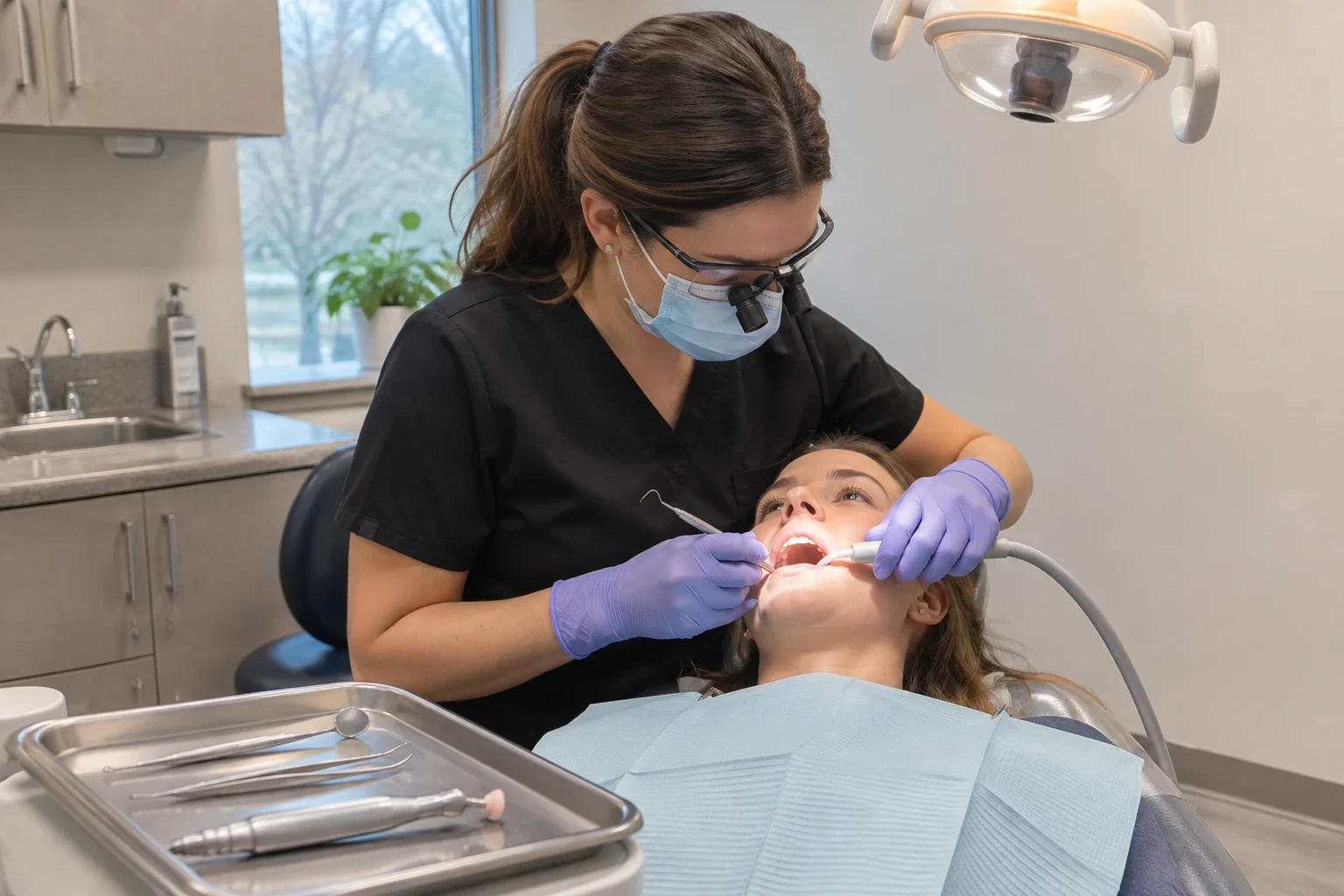
A checkup with us removes the tartar your brush can't reach, measures the health of your gums and finds small problems while they are still small. You see the same hygienist and dentist from visit to visit, so changes in your mouth get noticed.
What a Checkup Actually Does
Plaque is a soft film of bacteria that forms on teeth every day. Brushing and flossing clear most of it, but whatever stays behind along the gumline hardens into calculus, also called tartar, within a few days. Calculus is rough and porous, so more plaque sticks to it, and no toothbrush will lift it off. Only scaling instruments remove it.
The exam half of the visit is about finding change early. A cavity caught as a shadow between two teeth on an x-ray is often a small filling. The same cavity found a year later, after it reaches the softer dentin underneath, can mean a larger filling or a crown.
We are a small team, and we keep it that way on purpose. The hygienist who cleans your teeth this spring is the one who sees you next fall, and she has her own notes on the spot where your gums bled last time. That continuity is most of what makes a routine checkup useful.
What Happens During Your Checkup
- 01
Tartar removal at and under the gums
Calculus comes off with an ultrasonic scaler plus hand instruments, reaching into the narrow gap between gum and tooth where deposits begin. The ultrasonic tip vibrates under a water spray, loosening buildup with less scraping.
- 02
Measuring your gum pockets
A slim millimeter-marked probe checks the space around every tooth. Healthy readings tend to fall between 1 and 3 mm. Deeper numbers or bleeding on probing signal gum disease and show us where to concentrate.
- 03
X-rays on your schedule
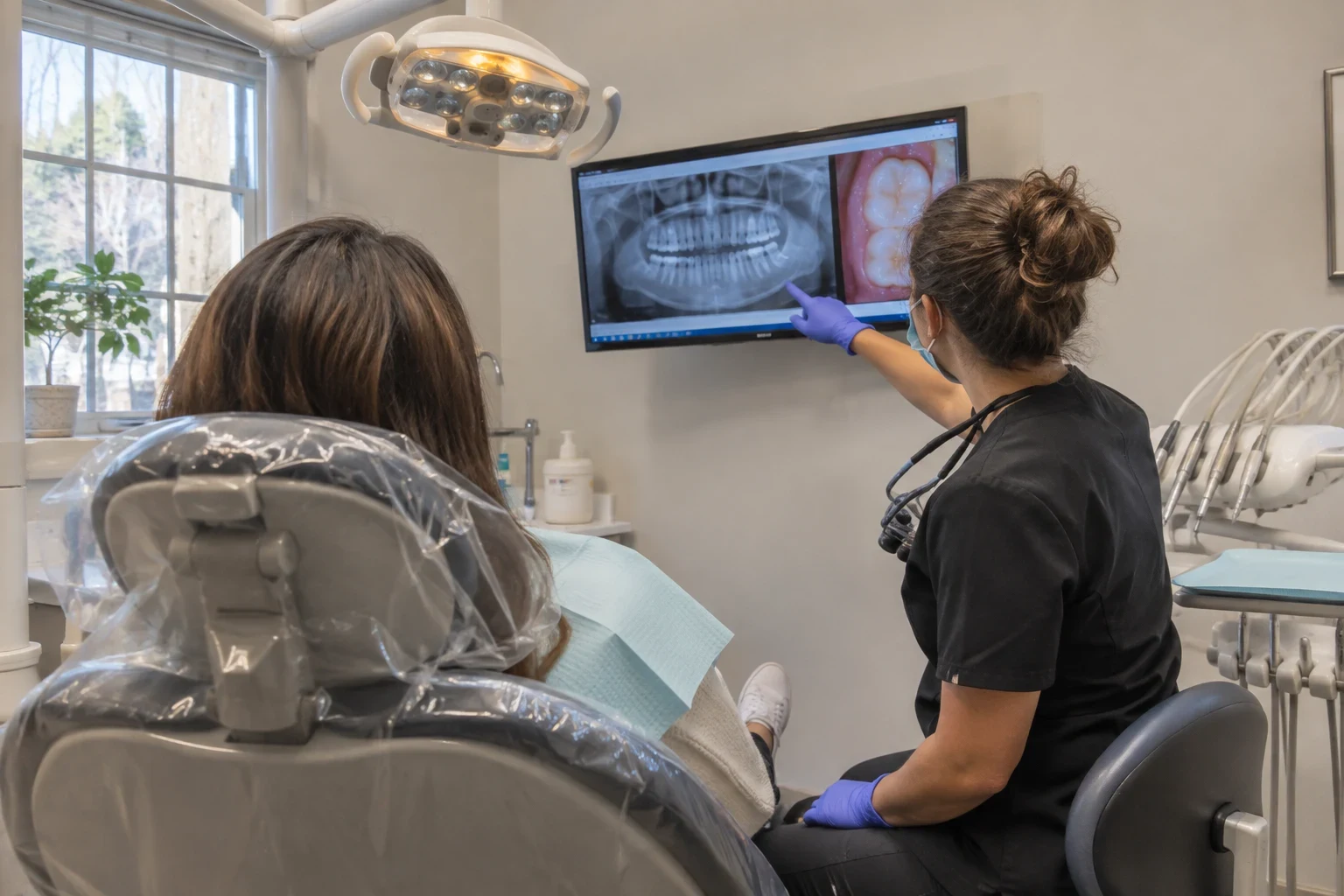
Bitewings reveal decay between the back teeth and bone levels that a visual check can't. How often we take them depends on your history, not on every appointment.
- 04
Exam by the dentist, plus cancer screening
The dentist looks over every tooth, your fillings and crowns, your bite and jaw joints. We also check the tongue, cheeks, palate and throat and feel along the neck for anything out of the ordinary.
- 05
Polishing and fluoride
A polish lifts surface stain and leaves the enamel smooth, which makes it harder for plaque to cling. Fluoride varnish can be added to harden enamel, especially if you get cavities easily or have sensitive teeth.
- 06
Findings in everyday language
Before you go, we walk you through what we saw, often on the x-ray or an intraoral photo, and tell you what can wait and what shouldn't. If treatment is needed, you take home a written treatment plan.
Questions about Exams & Cleanings?
Call(508) 392-5698When a Checkup Should Move Up Your List
Pink in the sink after brushing
Gums that bleed easily are usually reacting to plaque left along the gumline, the early stage called gingivitis. Caught now, it reverses with a professional cleaning and steadier flossing.
Bad breath that comes back
Bacteria trapped under calculus and in gum pockets produce sulfur compounds that mouthwash only masks for an hour or two.
Rough or yellow buildup behind the lower front teeth
That is where saliva glands deposit minerals fastest, so calculus often shows up there first.
Sensitivity to cold or sweets
It can mean gum recession exposing root surface, a worn filling or an early cavity. An exam tells you which.
It has been more than a year
Small cavities rarely hurt, so going by how your teeth feel is not reliable. If it has been several years, that is fine too. We start where you are.
How Your Appointment Runs
- 1
Health history and concerns
We review your medications and medical conditions, since some affect gums, bleeding or dry mouth. Then we ask what you have noticed, so nothing on your list gets missed.
- 2
Measurements and x-rays
The hygienist charts pocket depths and takes any x-rays that are due. New patients usually get a fuller set so we have a baseline.
- 3
Cleaning
Scaling, flossing and polishing come next. If an area is tender, tell us; we can slow down, switch instruments or numb a section.
- 4
Exam with the dentist
The dentist reviews the x-rays and charting with the hygienist, examines your teeth and soft tissue, and talks through findings with you directly.
- 5
Your next steps
We set your recall interval, usually every six months, sooner if your gums need closer watching. Any fillings or other work are explained and scheduled.
Why Checkup Costs Differ
Most dental insurance plans are accepted here. Many of them count a routine exam and cleaning as preventive care and pay more toward it than toward other treatment. What you owe depends on your plan and on what your visit actually requires. We review the expected cost when you book and again before adding any treatment.
- First visit or regular recall
- Your first appointment covers a more complete exam and baseline x-rays, so it includes more than a six-month recall.
- X-rays you are due for
- Bitewings, a single-tooth film and a full-mouth or panoramic series each carry their own fee, and plans cap how often each one is paid for.
- Gum health
- Healthy gums get a standard cleaning. Pockets measuring 4 mm or more with bone loss need scaling and root planing, a deeper cleaning done one quadrant at a time with local anesthetic.
- Your way of paying
- Without coverage, ask about our Office Dental Plan for patients without insurance when you phone. If your checkup finds fillings or other work, the CareCredit Patient Payment Plan can help cover it, and we will explain how it works.
Exam and Cleaning Questions
How often should I get my teeth cleaned?
Every six months suits most people. If you have gum disease, diabetes or a history of heavy tartar, three or four months works better, because the bacteria under the gumline repopulate in about that time. We base the interval on your measurements, not a fixed rule.
Will the cleaning hurt?
Most cleanings are mildly uncomfortable at most. Inflamed gums are more tender, and exposed roots can be sensitive to the water spray. Tell us early, and we can adjust technique or use a topical or local anesthetic.
Do I need x-rays every time?
No. Bitewings are commonly taken about once a year for adults with a low cavity rate, and more often if you are getting new decay. If you have recent x-rays from another office, we can request them.
It has been years since my last cleaning. What happens?
We start with a full exam and measurements, then decide whether a routine cleaning or a deeper cleaning fits. Heavy buildup sometimes takes two visits. There is no lecture; we just explain what we see.
Can my kids come to the same office?
Yes. Children's checkups follow the same idea, adjusted for growing teeth, and sealants and fluoride are part of that conversation. Our Kids' Dentistry page covers what those visits look like.
Will I see the same people next time?
That is how we schedule. Patients from Shrewsbury, Westborough, Grafton and Worcester see the same hygienist and dentist from visit to visit, which keeps your history in familiar hands.
Ready for Your Next Checkup
Tell us when your last cleaning was and what insurance you have, and we will find a time that works. New patients are welcome.