ServicesFillings
Fillings in Shrewsbury
When decay or a minor fracture opens a tooth, we clean it out, seal it and rebuild it with tooth-colored composite resin. Most fillings take one visit, and the same dentist and assistant stay with you from the first X-ray to the final bite check.
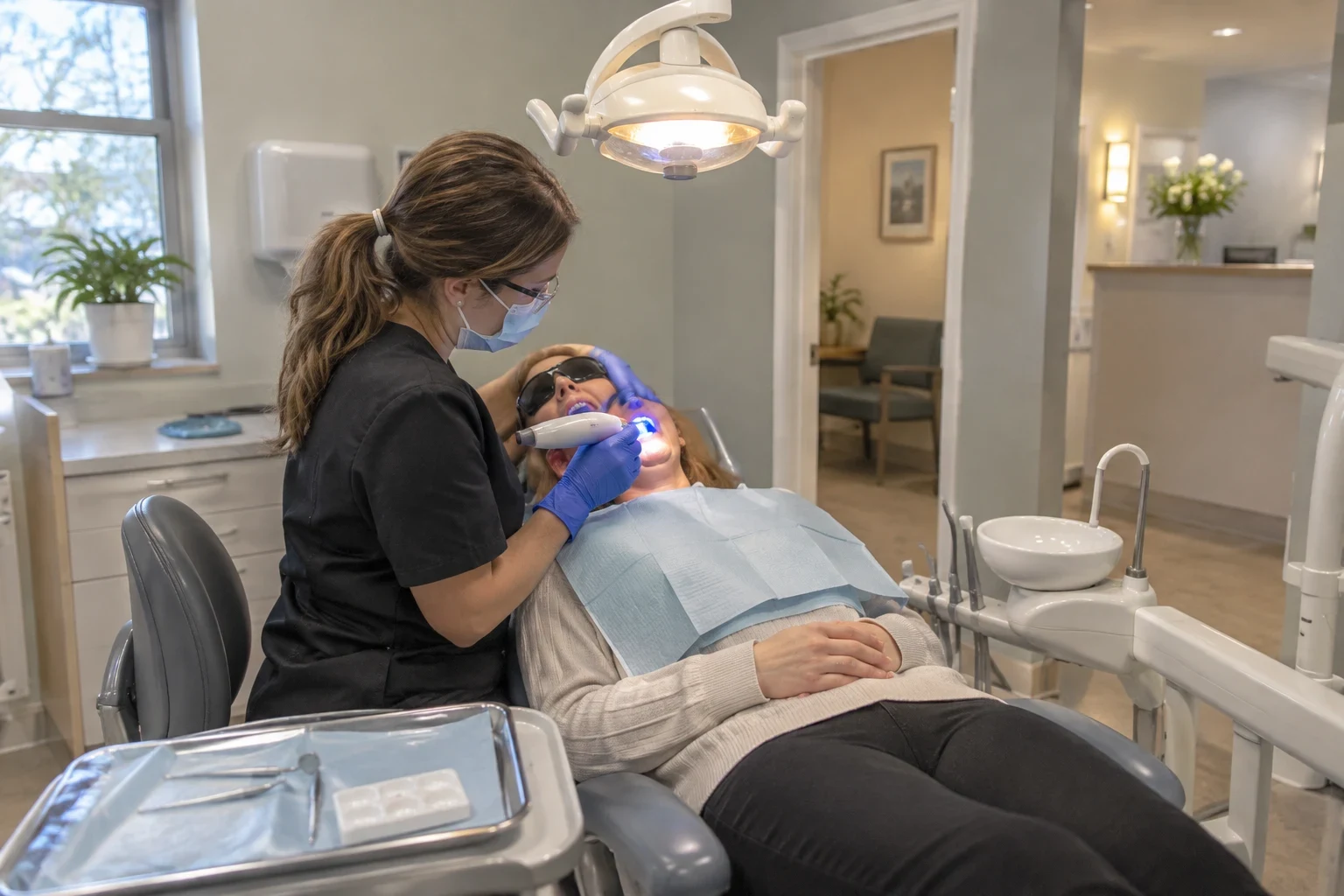
What a filling does and when it is the right fix
A cavity is a spot where acid from bacteria has dissolved the enamel. Once it reaches the softer dentin underneath, it spreads faster and starts to cause sensitivity. A filling stops that process: we remove the soft, infected tooth structure, then attach a durable material into the space so the tooth can chew normally again.
Fillings work best when the damage is minor to moderate and enough healthy tooth remains to hold the material. If decay has taken out a cusp or more than about half the tooth, a filling can crack under chewing force, and we will tell you plainly that a crown is the better choice. You can read about that option on our Crowns & Bridges page.
We are a small team, so the person who finds the cavity at your exam is usually the same person who fills it. You do not have to explain your history twice.
What happens at your filling appointment
Bitewing X-rays to find the cavity
Decay between teeth rarely shows in a mirror. Bitewings reveal cavities at the contact points and how near they are to the nerve, so we know the filling's size before beginning.
Numbing the tooth
We numb the tooth and nearby gum so you feel pressure without pain, and we don't start drilling until the area is fully numb.
Taking out the decay
We remove only softened enamel and dentin, keeping as much healthy tooth as we can. The less we take, the stronger the tooth stays over time.
Composite placed in layers
After etching, we coat the tooth with dental adhesive so the resin bonds to the enamel. Composite goes in thin layers, each hardened with a blue curing light, which limits shrinkage and gaps along the edges.
Contouring, bite test and polish
We carve the filling to follow your natural grooves, test your bite with marking paper and smooth down any high spots. A final polish leaves a slick surface that holds off stain and plaque.
Signs a tooth may need a filling
Sensitivity to cold or sweets
A short, sharp twinge from ice water or candy often means decay has reached the dentin, which has tiny channels that lead toward the nerve.
Food catching between teeth
If floss shreds or food keeps packing into the same spot, a cavity or a broken filling edge may have opened a gap.
A dark spot or rough edge
Brown or gray areas in the grooves, or a rough patch your tongue keeps finding, can be active decay or a chipped surface.
An old filling that has cracked
Older silver fillings expand and contract with hot and cold. Over the years this can crack the filling or the tooth around it, letting bacteria back in underneath.
Pain when you bite down
Pain on chewing can come from a cracked tooth or a filling that has failed. We find the cause before choosing the repair.
What happens during a filling visit
- 1
Exam and X-rays
We examine the tooth, take whatever X-rays are needed and show you what we find. You'll know plainly whether a filling will do or the tooth needs more.
- 2
Numbing and keeping the tooth dry
Once the anesthetic works, we keep the tooth dry with cotton rolls or a thin rubber barrier. Composite doesn't bond well to a wet surface, so this step counts.
- 3
Removing decay and rebuilding
We clear out the decay, etch the tooth, apply the adhesive and build up the filling in layers, curing each one. A single-surface filling often takes less than an hour start to finish.
- 4
Bite check and aftercare
We check how your teeth come together and smooth any high spot. The composite is fully hardened before you stand up. Your cheek and tongue may stay numb for a while, so wait to chew until feeling returns and you can't accidentally bite soft tissue.
Why filling costs vary
Most of a filling's price comes from how much tooth has to be rebuilt. We go over the treatment plan and the cost before starting, so nothing comes as a surprise. We accept most dental insurance plans, and patients without insurance can choose our Office Dental Plan or the CareCredit Patient Payment Plan.
- Surfaces involved
- Fees follow how many tooth surfaces the filling covers. A small spot on top of the tooth costs less than one that wraps from between the teeth onto the chewing surface.
- Which tooth it is
- Molars take the most chewing force and sit in tight spaces, so treating them can take more time and material than treating a front tooth.
- How deep the decay goes
- A cavity near the nerve may call for a protective liner beneath the composite. Very deep decay can shift the plan toward a crown or other treatment.
- What your plan covers
- Many plans pay a set percentage toward fillings, though some reduce payment for tooth-colored material on back teeth. We can help you make sense of your coverage.
Common filling questions
Something not covered here? (508) 392-5698
Is getting a filling painful?
Expect pressure and vibration, not pain. We numb the tooth completely first and check in with you as we work. If anything feels sharp, raise your hand and we will pause and give more anesthetic.
How many years will my filling last?
That depends on its size, its location and how hard you bite. Small fillings on well-cleaned teeth can hold up for many years. Grinding, chewing ice and new decay around the edges are the usual reasons a filling has to be replaced.
Do my old silver fillings need to come out?
Not simply because they are silver. An amalgam filling that is whole and sealed is usually best left in place. We suggest replacing it when it is cracked, leaking or has decay beneath it, and we show you the X-ray or photo so you can see the reason.
When can I eat after a filling?
The filling itself is ready right away, since the curing light hardens the composite before you leave. The reason to wait is the numbness: until your lip and cheek have feeling again, it is easy to bite them without noticing. Mild cold sensitivity for a few days is normal.
Will you fill a cavity in my child's tooth?
Yes. Baby teeth save space for adult teeth, and decay in them can still lead to pain and infection. Our Kids' Dentistry page describes how we care for younger patients.
When does a crown make more sense than a filling?
If a cavity is large enough that the tooth's remaining walls are thin, a filling can let the tooth split when you chew. A crown covers and protects the whole tooth. We will tell you which one your tooth needs and why.

Get that tooth sealed up
Shallow cavities are quicker and simpler to fix than deep ones. Give us a ring to set an appointment, and the same people will see your filling through from exam to polish.