ServicesTeeth Whitening
Teeth Whitening in Shrewsbury
We whiten teeth with professional-strength peroxide gel, after an exam that tells us what kind of staining you have and how your teeth will respond. The same small team checks your shade before, during and after, so the result is measured, not guessed.
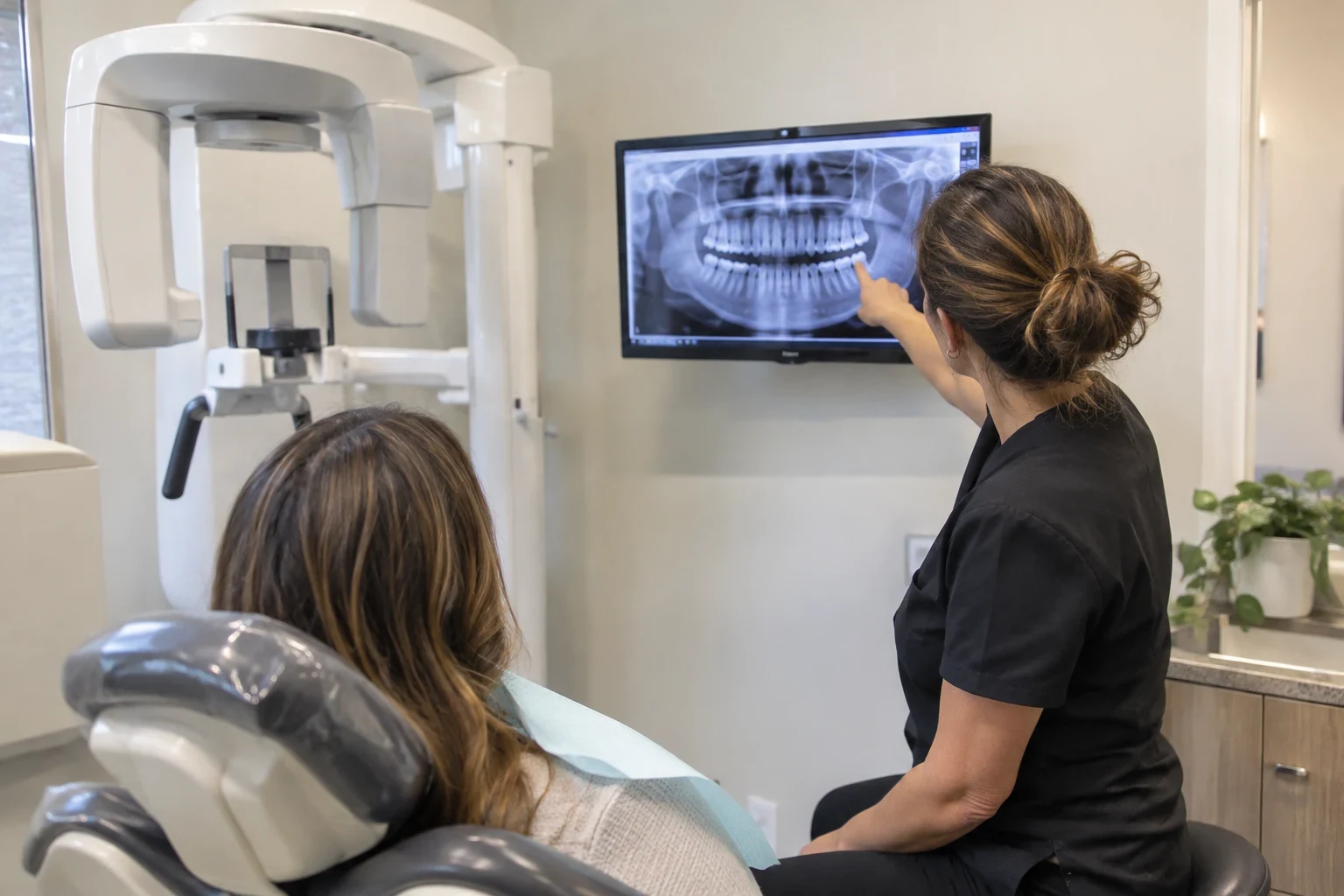
What professional whitening actually does
Whitening gel contains hydrogen peroxide or carbamide peroxide, which breaks down into oxygen molecules that pass through enamel and split apart the pigment compounds, called chromogens, sitting in the tooth. Smaller pigment molecules reflect less color, so the tooth reads lighter. The enamel itself is not sanded or coated.
How well it works depends on where the stain lives. Extrinsic stains from coffee, tea, red wine and tobacco sit in the outer enamel and usually lift well. Intrinsic stains, such as gray banding from tetracycline taken in childhood, white spots from fluorosis, or a single tooth darkened after an injury, respond more slowly and sometimes need a different approach.
That is why we start with an exam instead of handing you a kit. A small team means the person who looks at your teeth on day one is the same person who reviews the shade at the end, and who answers your questions in between.
What comes with your whitening
- Exam and stain review
- We check enamel thickness, the health of your gums and what kind of discoloration you have. When the stain is intrinsic, we tell you at the start how much lightening to expect.
- Your starting shade on record
- We match your current color to a shade guide and photograph your teeth in the same lighting each time, so you have a real before and after to compare.
- Review of crowns and fillings
- Bleaching does not change crowns, bridges, veneers or tooth-colored fillings. We note where each one is, so you know which teeth will lighten and which will keep their shade.
- Protecting your gums
- Peroxide gel can irritate the gums. We shield them before the gel goes on and fit any trays so the gel stays on your teeth.
- Handling sensitivity
- Peroxide briefly opens the small tubules in dentin, which can make teeth feel zingy for a day or two. If you tend toward sensitivity, we can use a desensitizer such as potassium nitrate and shorten wear time.
- Final shade check
- We hold your new shade up against the starting record and go over touch-ups, so you know how to keep your color.
Signs whitening may be right for you
Yellowing from daily coffee or tea
Tannins in coffee and tea build up in the enamel over years. This kind of surface staining is the type that usually responds best.
Store-bought strips stopped working
Over-the-counter strips use lower peroxide levels and flat strips that miss the curves between teeth. A professional gel and fitted trays reach more of the surface.
Teeth look darker as you age
Enamel thins with time and the yellower dentin underneath shows through. Whitening can lighten the dentin layer too, though results vary.
A single tooth has turned gray
One dark tooth often points to a past injury or a nerve problem. We check that tooth first, because whitening will not fix what is going on inside it.
You are planning a crown or bridge
New crowns are made to match your current shade. Whitening first lets us match the crown to the lighter color you want to keep.
How a whitening appointment works
- 1
Exam and cleaning first
Whitening works on clean enamel, so plaque and tartar come off first. If we find a cavity or exposed root, we treat it before whitening, since peroxide on an open cavity or bare root can be painful.
- 2
Shade record and gum isolation
We note your starting shade, take photos and protect your gums and lips. The same team member stays with you through this step and the next.
- 3
Gel application
Professional-strength gel goes on in timed rounds, or into custom trays made from impressions of your teeth that you wear on a set schedule. We explain which route fits your stains and your sensitivity.
- 4
Review and touch-up plan
We compare the result to your starting shade and go over what to avoid for the first 48 hours, when enamel picks up stains most easily. You leave knowing how to touch up later.
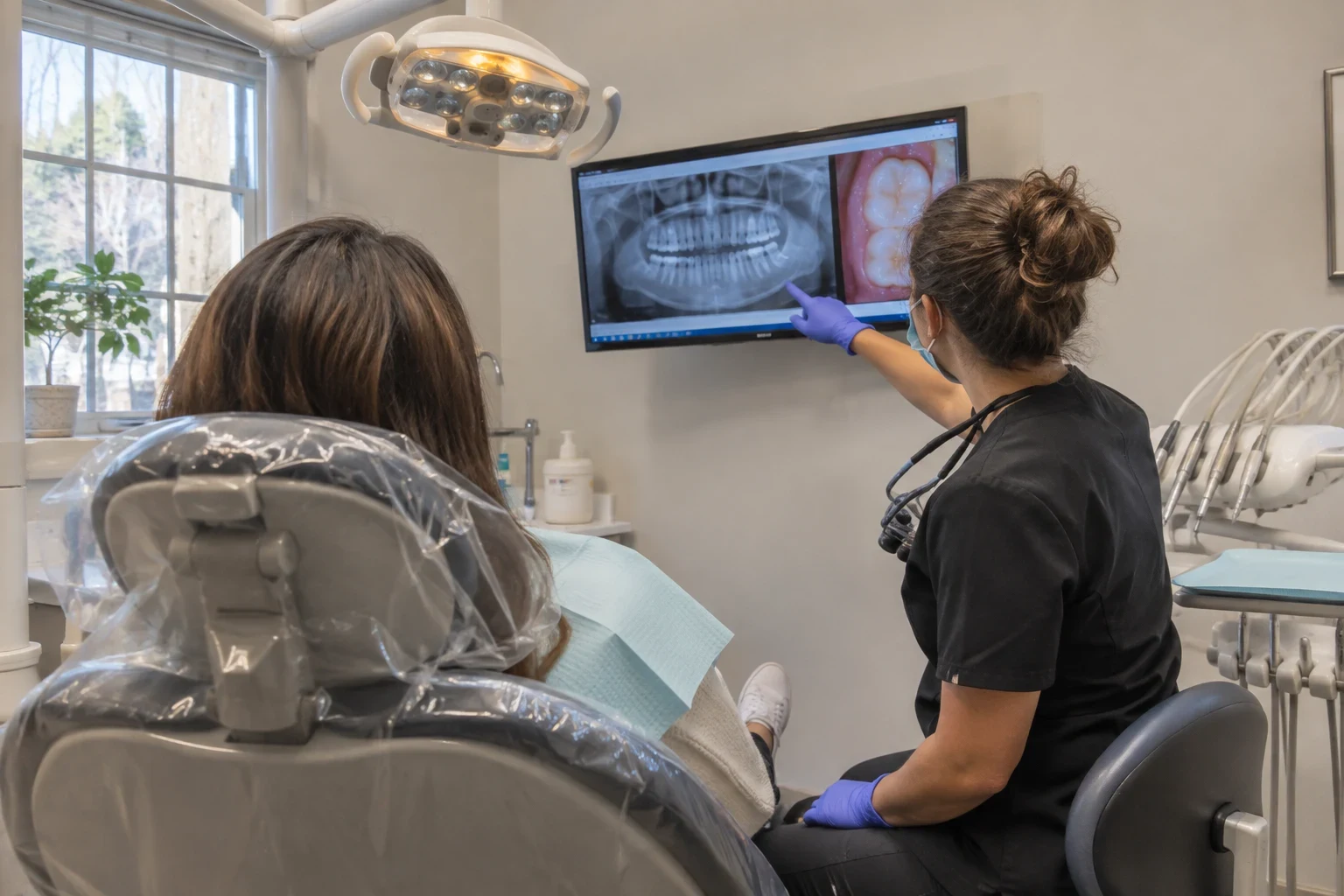
What sets the price of whitening
Because insurers generally treat whitening as cosmetic, most dental insurance plans do not cover the gel or trays, though the exam and cleaning beforehand often are covered. You hear the full price before we apply any gel. Without coverage, you can use the Office Dental Plan for patients without insurance, or finance treatment over time with the CareCredit Patient Payment Plan.
- In-office or take-home trays
- An in-office session takes more clinical time in one appointment. Take-home whitening involves impressions and custom trays from a lab, and you keep those trays for future touch-ups.
- Type of staining
- Food and drink stains on the surface often fade in a single course. Discoloration inside the tooth may take a longer course or additional rounds before you see a difference.
- Work to do beforehand
- A cavity, a worn filling or inflamed gums needs care before whitening starts. That treatment is billed on its own and may be covered by your insurance.
- Dental work that no longer matches
- After your natural teeth get lighter, older front crowns or fillings may look darker beside them, and you might choose to replace them. We mention this at the exam so you know ahead of time.
Teeth whitening questions
Something not covered here? (508) 392-5698
Will whitening make my teeth sensitive?
Some patients notice brief, sharp twinges for a day or two. Peroxide temporarily opens the microscopic tubules in dentin, and they settle once treatment ends. If your teeth are already sensitive, we can add a desensitizing agent and shorten wear times.
Will my crowns and fillings whiten too?
They will not. Porcelain, zirconia and composite resin don't react to peroxide, so they hold their present color while the natural teeth around them get lighter. That is the reason we chart them before starting.
How long will my whiter shade hold?
For most patients, a year or longer. The biggest variable is how often coffee, tea, red wine or tobacco touch your teeth. Wearing your custom trays for a short touch-up now and then keeps the color close to where it ended.
Does whitening damage enamel?
Peroxide whitening done under a dentist's supervision and used as directed does not dissolve enamel. Trouble usually comes from overusing products, or from bleaching over an untreated cavity or exposed root. Catching those before treatment is the point of our exam.
Can my teenager get their teeth whitened?
We usually hold off until every permanent tooth has come in and the pulp chambers have matured, because younger teeth tend to react with more sensitivity. Each teen is assessed on their own, and we go over the decision with you.
Find out how white your teeth can get
An exam tells us what is staining your teeth and what a realistic result looks like. The same small team takes you from the first shade check to the last.