ServicesExtractions
Gentle Tooth Extractions in Shrewsbury
Some teeth are past rebuilding. A fracture may have split the root, decay may have hollowed out the crown, or the tooth may be pushing its neighbors out of line. We take an X-ray before deciding and numb the area fully, and the same dentist and assistant stay with you through follow-up.
When Removing a Tooth Is the Right Call
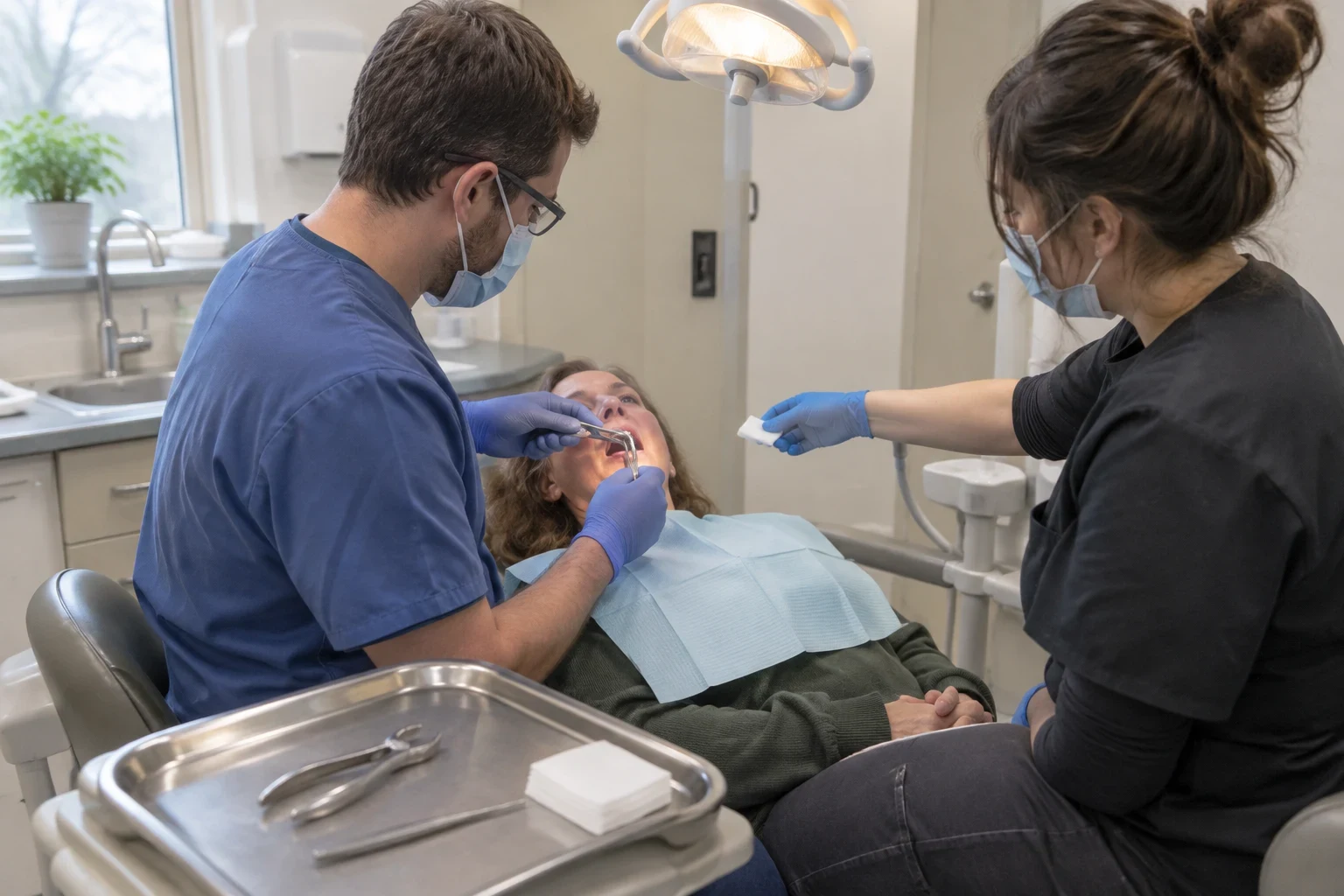
An extraction takes a tooth out of its socket in the jawbone. The tooth is held there by the periodontal ligament, a thin band of fibers between the root and the bone. Most extractions loosen those fibers gently until the tooth releases.
We only recommend removal when saving the tooth no longer makes sense. A crack that runs down into the root, decay that has eaten away most of the crown, or bone loss that leaves a tooth loose are common reasons. If a filling or a crown can still do the job, we tell you that first and explain why.
Our team is small on purpose. The person who reads your X-ray is the person who removes the tooth and checks the healing socket a week later. You don't have to repeat your history to someone new at each step.
What Your Extraction Includes
- 01
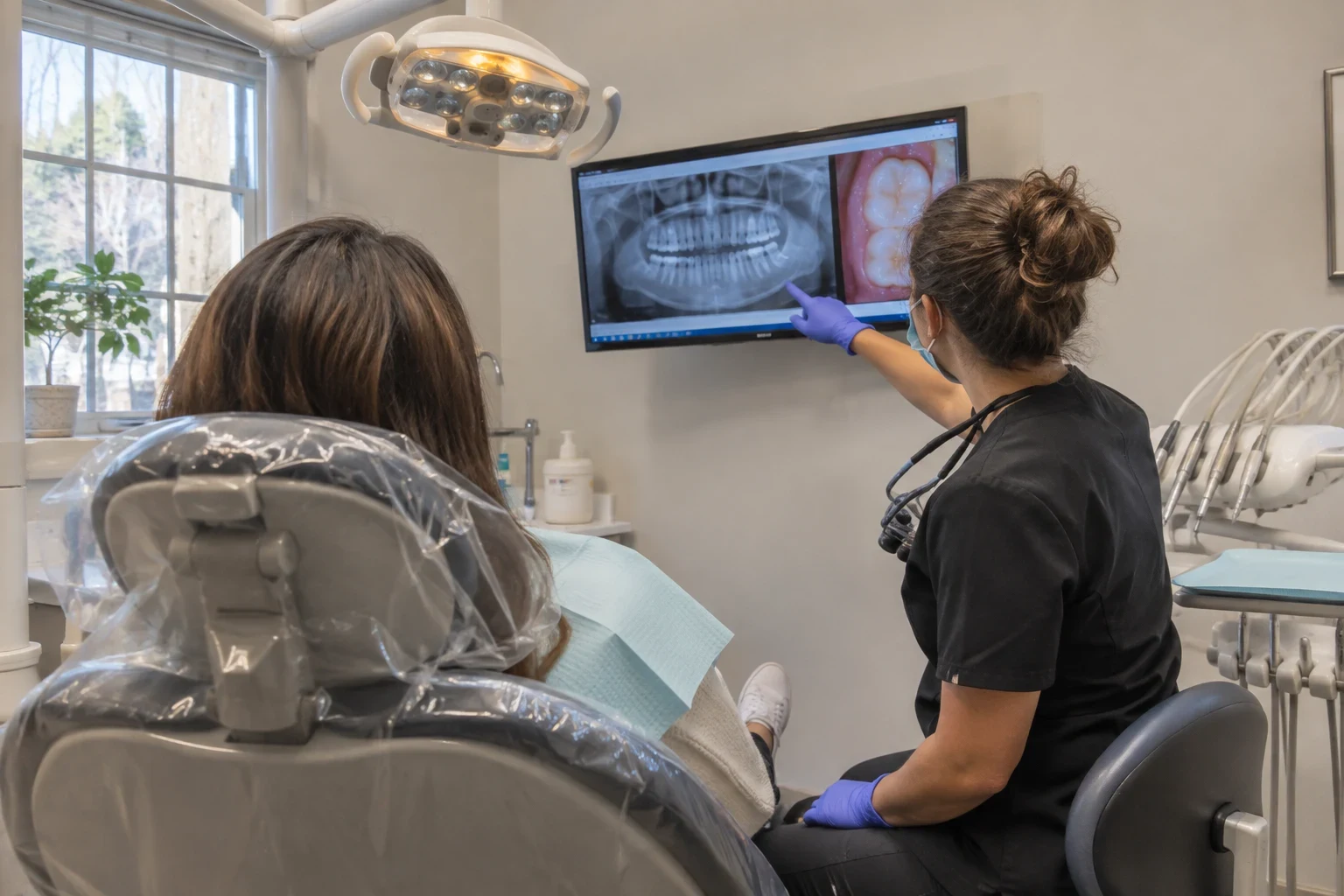
X-ray of the root and bone
We image the full root before anything else. Root shape, curvature and how close it sits to the sinus or nerve tell us whether the removal will be simple or needs more steps.
- 02
Thorough local anesthetic
We numb the tooth and the surrounding gum, then wait and test before starting. You will feel pressure during the removal, but sharp pain means we stop and add more anesthetic.
- 03
Simple or sectioned removal
A tooth with one straight root usually comes out with an elevator and forceps. Molars with two or three roots are often divided into sections so each root lifts out separately, which spares the surrounding bone.
- 04
Socket care
We clean the socket, place gauze to start the blood clot and add a few dissolving stitches when the gum needs support.
- 05
Aftercare and next steps
You leave with written aftercare instructions and a follow-up visit on the calendar. If the gap will affect your bite or chewing, we talk through replacement options, including a bridge from our Crowns & Bridges service.
Questions about Extractions?
Call(508) 392-5698Signs a Tooth May Need to Come Out
Sharp pain when you bite down
A sudden jolt on chewing that fades when you release often points to a crack. If the X-ray and exam show it runs below the gumline into the root, the tooth usually can't be sealed.
Very little tooth left
When decay has destroyed most of the crown, there may not be enough healthy structure to anchor a filling or crown.
A tooth that moves
Gum disease can dissolve the bone that supports a root. Once too much bone is gone, the tooth stays loose no matter how well it is cleaned.
A sore, swollen wisdom tooth
A partly erupted wisdom tooth leaves a flap of gum that traps food and bacteria. Repeated soreness or swelling back there is a sign it may be time to remove it. If swelling spreads into your cheek or comes with a fever, call the office promptly.
A baby tooth that won't let go
Sometimes the adult tooth comes in behind a baby tooth that never loosened. Our Kids' Dentistry visits cover these small extractions so the permanent tooth can move into place.
How the Visit Goes
- 1
Exam and X-ray
We look at the tooth, take an X-ray and explain what we see. You hear the options, including keeping the tooth if that is realistic, before we agree on a treatment plan.
- 2
Numbing and checking
We apply anesthetic, give it time to work and confirm the area is numb. Many simple extractions take only a few minutes once you are numb.
- 3
Removal
We widen the socket slightly and rock the tooth free, or section it if the roots require it. We tell you what we are doing as we go.
- 4
Protecting the clot
You bite on gauze while the clot forms. For the first day, skip straws, smoking and hard rinsing, since suction can pull the clot out and expose the bone, which causes a dry socket.
- 5
Follow-up check
The same dentist who removed the tooth looks at the healing site. If anything looks off, you are talking to someone who already knows your case.
What Sets the Price of an Extraction
Price depends mostly on how the tooth is shaped and where it sits, which is why an X-ray comes before any quote. We tell you the fee for your specific tooth before we begin. We take most dental insurance plans, and patients without insurance can use our Office Dental Plan or the CareCredit Patient Payment Plan.
- Simple versus surgical
- A fully erupted tooth with one root costs less to remove than a tooth snapped off at the gumline or one we have to divide. Roots that curve or fuse together add chair time.
- Number of teeth
- Removing more than one tooth in a single visit has different pricing than one tooth alone, and we book the appointment long enough to cover it.
- Imaging needed
- Most teeth need only one standard X-ray. When a root sits near the nerve or the sinus, we may need more angles.
- Replacing the tooth afterward
- Leaving the gap open adds nothing to the extraction fee. A bridge is a separate treatment, and we review its cost when you decide on it.
Common Questions About Having a Tooth Out
Is an extraction painful?
The numbing stops the pain, so most people feel pressure and pushing rather than anything sharp. We check the area before we begin and give more anesthetic if you need it. A few days of soreness afterward is expected, and we explain how to handle it before you go home.
How soon will it heal?
The gum generally covers the socket within one to two weeks, while the bone below fills in over a longer stretch. Protecting the blood clot during the first few days matters more than anything else for good healing.
Can the tooth be saved instead?
Many times, yes. If the root is sound and enough tooth remains, a large filling or a crown can rebuild it. We suggest removal only when the X-ray and exam show those repairs won't last, and we walk you through the reasons.
Will the missing tooth need replacing?
It depends. Wisdom teeth and teeth taken out for crowding generally need no replacement. When a back molar or front tooth is lost, the teeth beside it can shift and lean, so a bridge is often recommended to hold your bite steady.
Can I have a tooth pulled without insurance?
You can. Our Office Dental Plan is designed for patients without insurance, and the CareCredit Patient Payment Plan spreads the cost over time. We explain both when you phone.
Let Us Take a Look at That Tooth
An X-ray and an exam tell us whether the tooth can be saved or should come out. Call to set up an appointment, and you will see the same small team from the first visit to the last.