ServicesKids' Dentistry
Kids' Dentistry in Shrewsbury
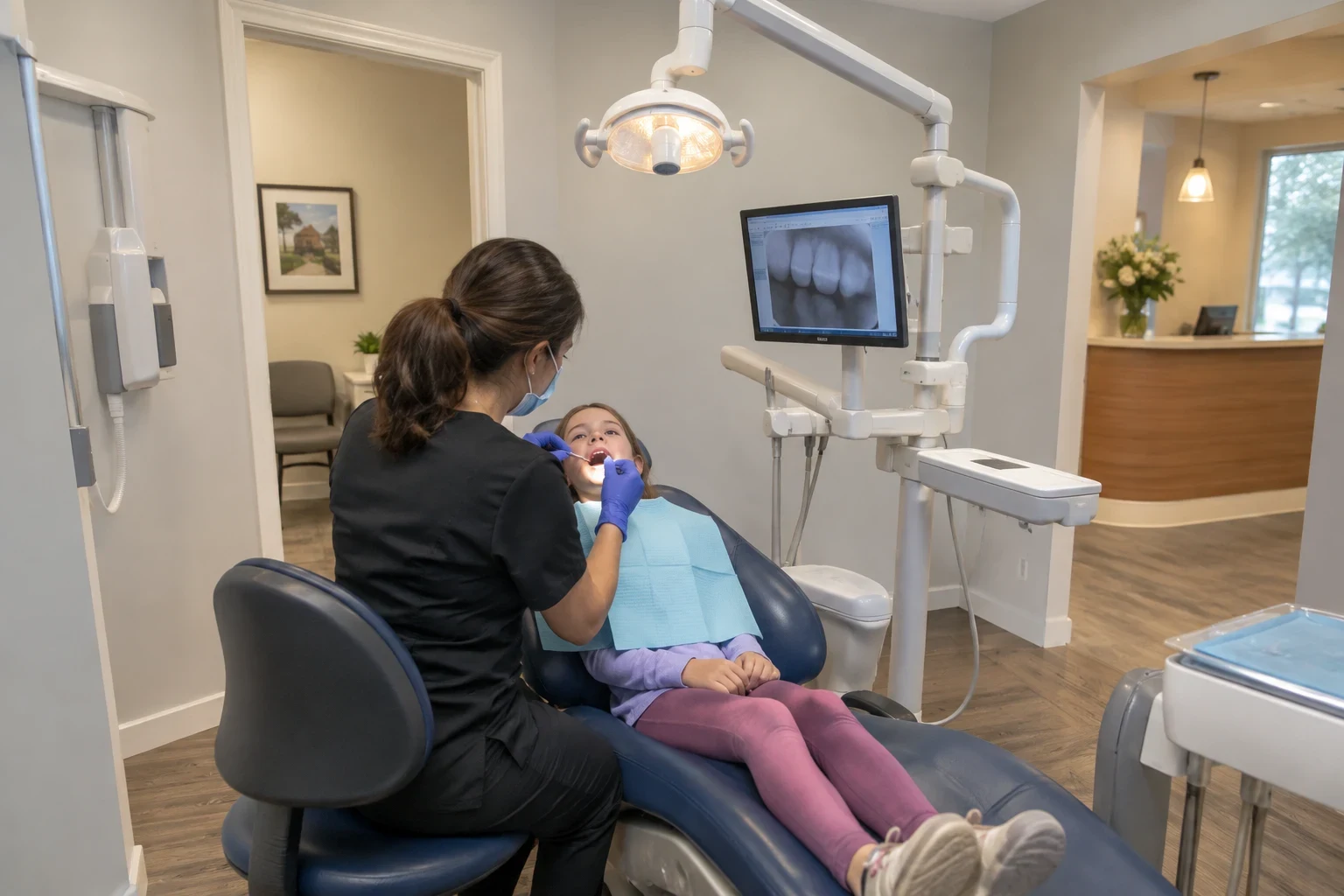
We look after children's teeth from the first tooth to the last baby molar: cleanings, fluoride varnish, sealants and small fillings. Your child sees the same few people each time, so the chair, the voices and the routine stop being new and start being normal.
Why baby teeth get real attention here
Baby teeth have thinner enamel than adult teeth, roughly half as thick, so a cavity can reach the soft dentin and then the nerve much faster. They also hold space. If a baby molar is lost early to decay, the teeth behind it drift forward and the permanent tooth underneath can come in crowded or blocked.
Kids' dentistry is mostly about catching small things while they are still small: a chalky white spot that fluoride can harden again, a deep groove that a sealant can close off, a contact between two molars that needs an X-ray before it turns into a hole.
Our team is small on purpose. The hygienist who cleans your child's teeth in spring is usually the one who sees them in fall, and the dentist who wrote the treatment plan is the one who carries it out. Children read faces, and a familiar one makes the next visit easier.
What a kids' visit covers
Cleaning and polish
We remove plaque and any hardened tartar, often found behind the lower front teeth, then polish. For young children we keep instruments few and explain each one before it goes in.
Fluoride varnish
A thin coat painted on after the cleaning. It sets on contact with saliva and helps remineralize early weak spots in enamel.
Sealants on molars
Permanent molars have deep pits where a toothbrush bristle cannot reach. We usually seal the first molars around age six and the second molars around twelve, with no drilling and no numbing.
X-rays when they are useful
Once back teeth touch, decay between them is invisible to the eye. Bitewing X-rays show it early, and we take them on a schedule based on your child's cavity risk, not by habit.
Small fillings
When a cavity has gone past the enamel, we place a tooth-colored filling. Our Fillings page explains materials in more detail.
Growth and bite check
We watch how adult teeth are erupting, look for crowding, and note habits like thumb sucking that can shape the bite.
Signs your child should be seen
White or brown spots
Chalky white bands near the gumline are early enamel loss. Brown or dark spots usually mean the decay is further along.
Wincing at cold or sweets
Sensitivity often means the enamel is broken and the dentin beneath is exposed.
Chewing on one side
Kids rarely describe tooth pain well. Favoring one side or pushing food away can be the only clue.
A bump on the gum
A small pimple-like bump near a baby tooth can be draining infection from the nerve. Call so we can get your child seen soon.
Adult tooth behind a baby tooth
Lower front teeth sometimes erupt behind baby teeth that have not loosened. If the baby tooth stays put, we may recommend removing it, which our Extractions page covers.
How a visit goes
- 1
A short phone call
Tell us your child's age, any worries and your insurance. We schedule a time of day that suits a young child, often mornings for toddlers.
- 2
Meeting the team
Toddlers can sit in your lap facing the dentist. Older kids get the chair, and we show and tell before we do anything, letting them feel the polisher on a fingernail first.
- 3
Cleaning, exam and fluoride
The hygienist cleans and the dentist checks each tooth, the gums, the bite and any X-rays. Fluoride goes on last.
- 4
A clear plan for you
We walk you through what we found, what can wait and watch, and what needs treatment, with costs explained before anything is booked.
- 5
The same people next time
Follow-up visits are booked with the same hygienist and dentist whenever we can, so your child knows exactly who is coming through the door.
What affects the cost
A routine kids' checkup is the most predictable visit we have. Costs grow when treatment is added, and we explain each item before we start. We accept most dental insurance plans and can check your benefits during the call.
- Your insurance plan
- Many plans treat children's cleanings, fluoride and sealants as preventive care, but frequency limits and age cutoffs vary from plan to plan.
- How many teeth need work
- Sealants are priced per tooth. Fillings depend on how many surfaces of the tooth the cavity involves.
- X-ray type and timing
- Bitewings are the usual set. A wider panoramic image is taken only when we need to see developing adult teeth.
- No insurance or a gap in coverage
- Our Office Dental Plan is for patients without insurance, and the CareCredit Patient Payment Plan can spread out the cost of larger treatment.
Questions parents ask
Something not covered here? (508) 392-5698
When should my child first see a dentist?
By the first birthday or within six months of the first tooth, whichever comes first. That first visit is short. We count teeth, check for early decay and show you how to brush them.
Is it worth filling a baby tooth that will fall out?
Often yes. Back baby molars usually stay until age ten to twelve, and an untreated cavity can reach the nerve, cause an abscess and damage the adult tooth forming underneath. If a tooth is close to falling out, we will tell you when watching it makes more sense.
Can I stay in the room?
Yes. Younger children usually do better with a parent close by. Some older kids prefer to go in alone, and that is fine too.
My child is nervous. What do you do differently?
We go slowly, name every tool and keep the same people on your child's care. Short, predictable visits build trust faster than one long one, so we sometimes split treatment into two appointments.
Do sealants replace brushing?
No. Sealants protect the chewing surfaces of the molars, but the sides of teeth and the spaces between them still need brushing and flossing.
Give your child a dentist they recognize
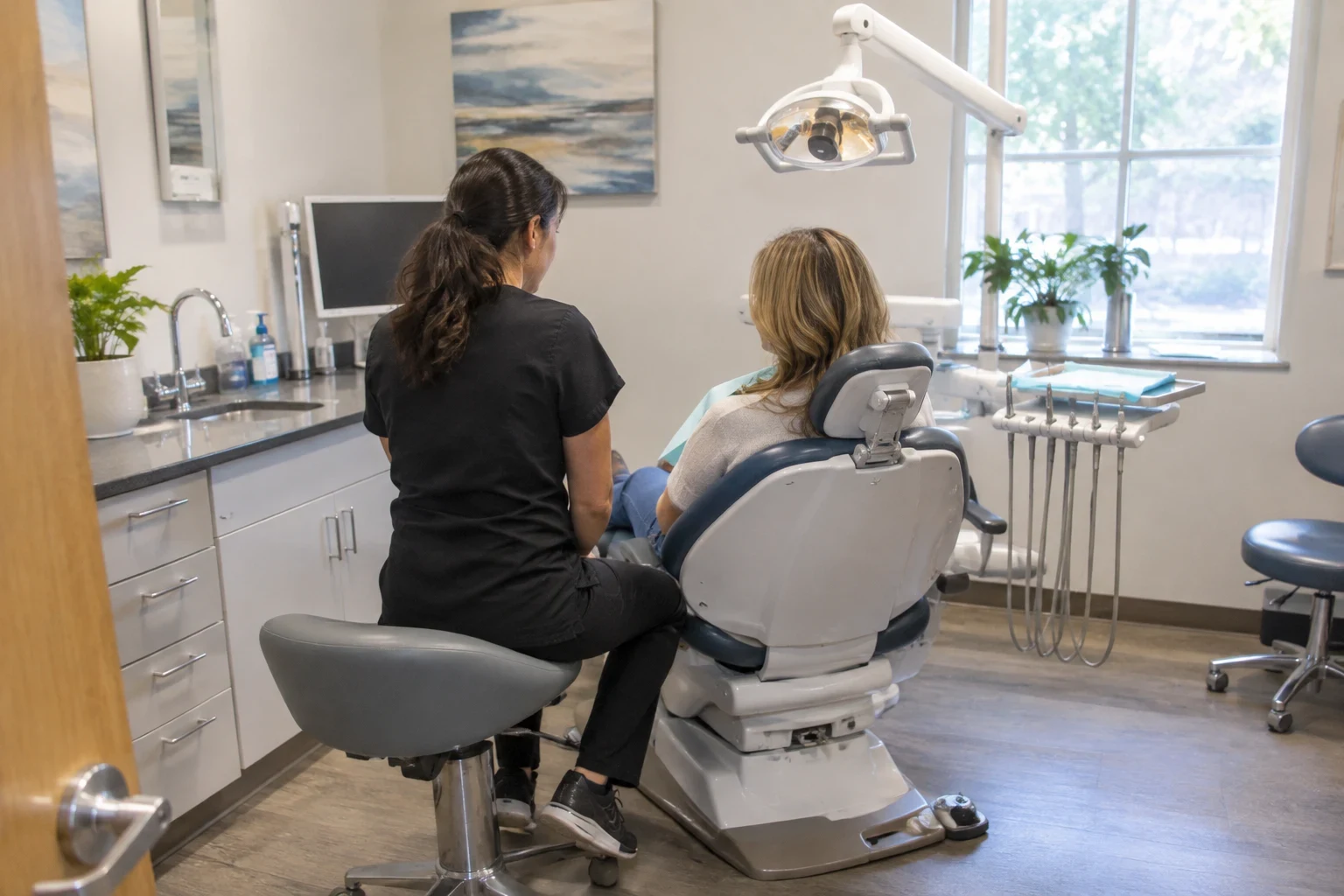
One phone call gets your child an appointment with the team that will see them through the years ahead. We see families from Shrewsbury, Worcester, Westborough and nearby towns.