ServicesInvisalign / Clear Aligners
Invisalign and Clear Aligners in Shrewsbury
Clear aligners move teeth with a series of thin plastic trays, each shifting them a fraction of a millimeter. We check your bite, plan the movement and see you through every tray change and the retainer that follows, with the same small team at each visit.
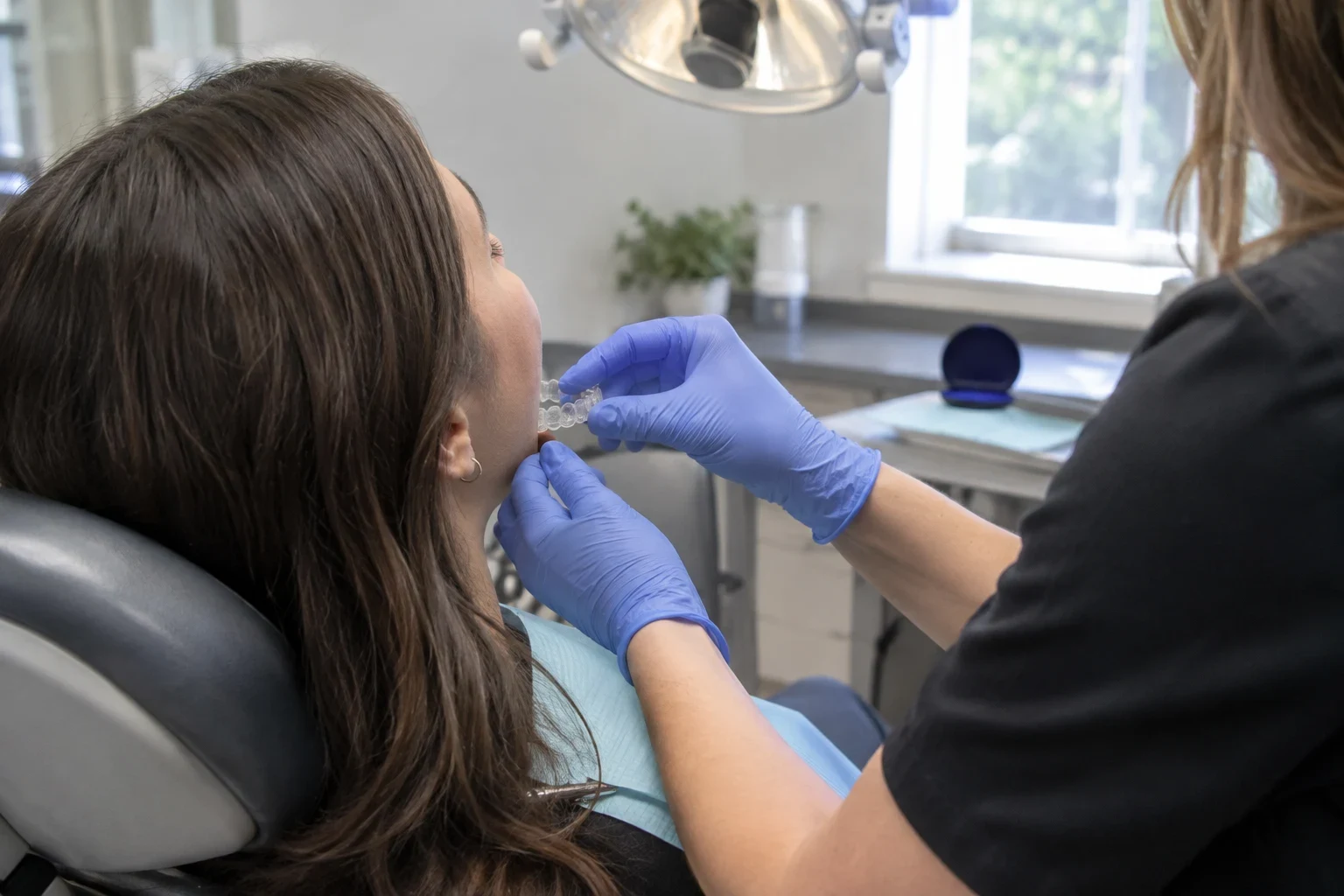
What clear aligners do, and when they fit
Each aligner is shaped slightly differently from the one before it. Worn about 22 hours a day, it presses steadily on specific teeth, and the bone around each root remodels to let the tooth move. Every week or two you switch to the next tray, and those small changes add up to a straighter, better-aligned smile.
Aligners work well for crowding, gaps, mild to moderate crossbites and overbites, and teeth that shifted after braces years ago. Severe skeletal bite problems or teeth that need very large rotations may call for a different approach. We will tell you that at the first visit rather than start a plan we don't think will finish well.
Our office is small on purpose. The dentist who examines you is the one who plans your movement and checks your progress, so nobody has to catch up on your case from a chart note.
What your aligner treatment includes
- Bite and gum evaluation
- Before planning any movement, we check for decay, gum health and bone support with an exam and X-rays. Active cavities or inflamed gums should be treated first, because aligners cover the teeth for most of the day.
- A mapped treatment plan
- We plot each tooth's path from where it sits now to where it should end up, and show you the projected result before you commit. The plan sets the number of trays and roughly how long you will wear them.
- Attachments
- Small tooth-colored composite bumps fixed to select teeth give the plastic something to grip. They help with rotations and vertical movement, and we polish them off at the end.
- Spacing adjustments when needed
- If teeth are tightly crowded, we may smooth a fraction of a millimeter of enamel between them, called interproximal reduction, to make room. We explain where and why before we do it.
- Progress checks and refinements
- We see you every several weeks to confirm your teeth are tracking with the trays. If one lags behind, we order refinement aligners to finish the movement.
- Retainers
- Teeth tend to drift back toward their old positions, especially in the first year. We fit retainers at the end and explain how often to wear them.
When clear aligners may make sense
Teeth that crowd or overlap
Overlapping teeth hold plaque in spots a brush and floss struggle to reach, which raises the chance of cavities and inflamed gums between them.
Spaces where food gets stuck
Gaps trap food, and over time the teeth beside them can lean into the open space.
Teeth that moved after braces
If you wore braces as a teen and then stopped using your retainer, the lower front teeth often crowd first. Aligners are a common fix for that relapse.
Chipped or unevenly worn edges
Teeth that meet at the wrong angle can chip or flatten. Correcting the bite shares chewing forces more evenly across the teeth.
You'd rather avoid brackets and wires
Aligners come out for eating and brushing and are hard to spot when you talk, which many adults and teens care about.
What each visit covers, start to finish
- 1
First visit and records
We check your teeth and gums, take X-rays and record your bite. By the end you know whether aligners fit your case.
- 2
Going over the plan
We walk through the planned movement, how many trays you'll need and the expected timeline, along with the cost and how your insurance or payment options apply.
- 3
Getting your first trays
We bond any attachments, check that the first trays fit, and practice putting them in and taking them out with you so the plastic doesn't bend or crack. Each new tray usually brings a day or two of pressure.
- 4
Routine check-ins
Every several weeks we make sure your teeth are tracking, check the attachments and give you your next trays. You see the same people each time, which makes small changes easier to notice.
- 5
Wrapping up and retainers
When your teeth reach their planned positions, we take off the attachments, polish the enamel and fit your retainers.
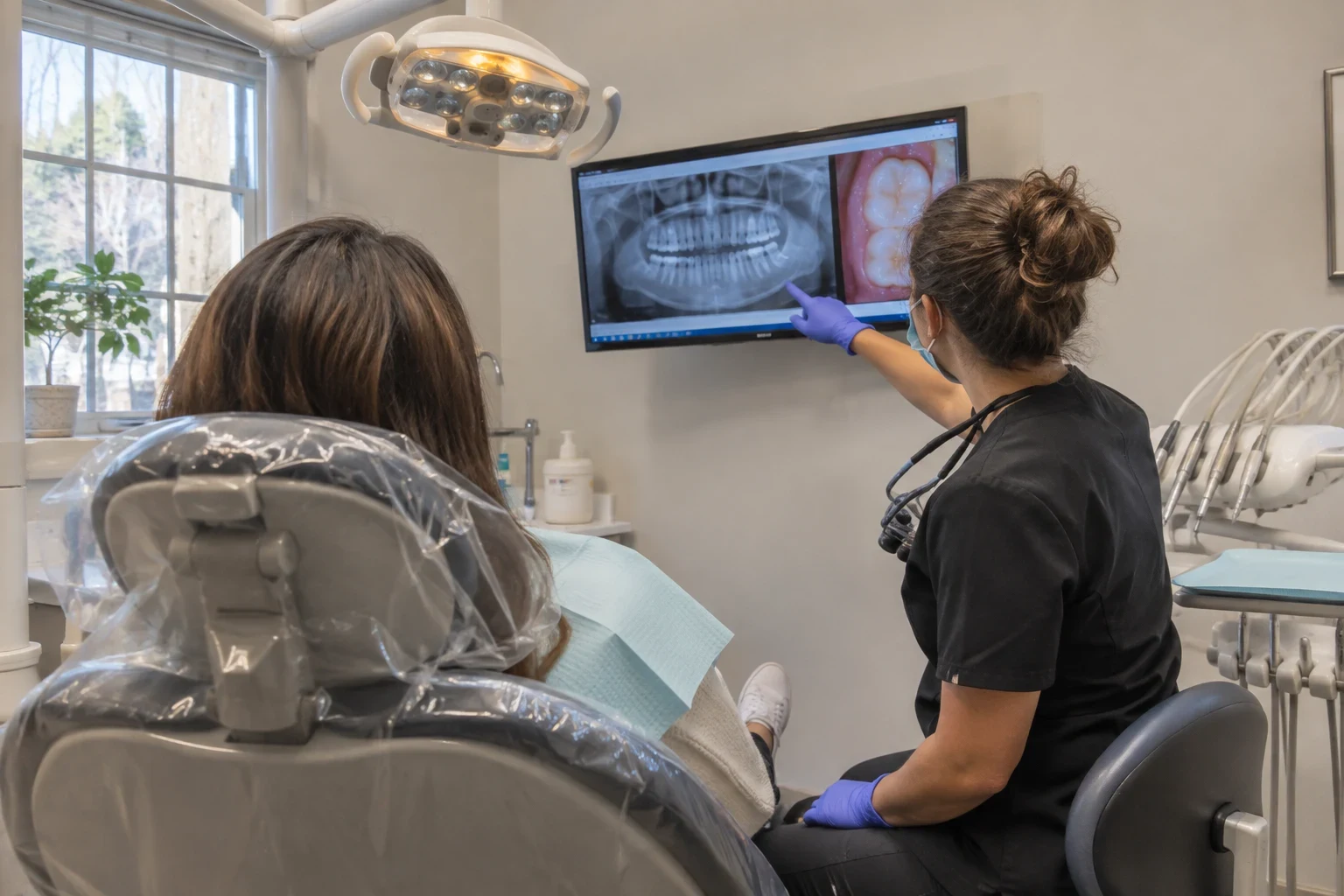
What changes the price of clear aligners
Most of the cost comes down to how far your teeth have to move and how long that takes. After the records visit and before we order any trays, you get the cost in writing. We accept most dental insurance plans. Without coverage, you can join our Office Dental Plan, and if monthly payments suit you better, the CareCredit Patient Payment Plan is available.
- How much movement is needed
- Mild crowding needs fewer trays than rotations, bite correction or closing wide gaps.
- How long treatment runs
- Each added tray and check-in visit raises the total.
- Dental work beforehand
- A cleaning, fillings or an extraction may be needed before aligners start. That work is listed on its own lines so you can see what each piece covers.
- Refinement trays and retainers
- Some cases need another round of trays to finish. The retainer type also changes the cost, and we explain what comes with your treatment.
- Orthodontic coverage
- Some plans carry an orthodontic benefit, often with a lifetime maximum or an age cutoff. We can check your plan's coverage before you decide.
Common aligner questions
Something not covered here? (508) 392-5698
How long do I need to wear the trays each day?
Plan on 20 to 22 hours. Take them out for food and any drink other than plain water, and brush before putting them back so nothing sits against your teeth. Leaving trays out for long periods lets teeth fall behind the plan, the most common reason treatment takes longer.
Are aligners painful?
Most people feel tightness or pressure for the first day or two of each tray, a sign the teeth are moving. That usually eases once the tray seats completely. Attachments may feel rough to your tongue at first and stop bothering you within a few days.
How long will treatment last?
Straightforward cases can wrap up in several months, and more complex bite corrections can run a year or longer. We estimate your timeline at the plan review visit and revise it if refinements are needed.
Are clear aligners an option for teens?
Yes, once enough permanent teeth are in. For teens we check whether growth or remaining baby teeth change the plan. Care for younger children is covered on our Kids' Dentistry page.
Could my teeth shift back afterward?
They can if you skip your retainers. The fibers around each root need time to settle into the new position, so wearing retainers matters most in the first months and continues at night for the long term.
Can I whiten while wearing aligners?
Waiting until the attachments are removed usually works better. Composite won't whiten, so bleaching around attachments can leave patchy spots. Many patients book teeth whitening right after treatment ends.
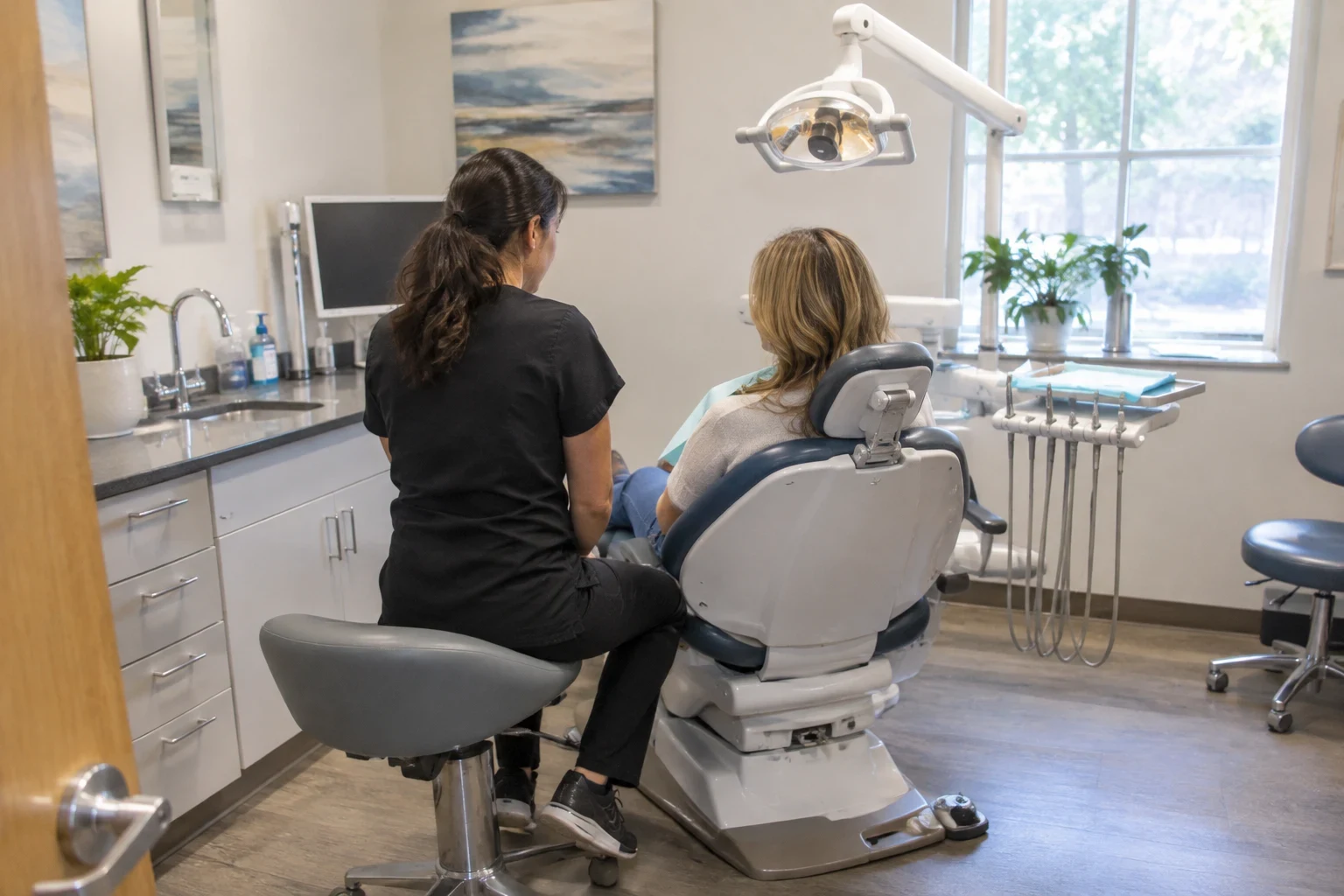
Start with a look at your bite
At the first appointment we examine your teeth, hear what you want to change and tell you plainly whether aligners make sense. Patients come to us from Shrewsbury, Westborough, Grafton and nearby towns.